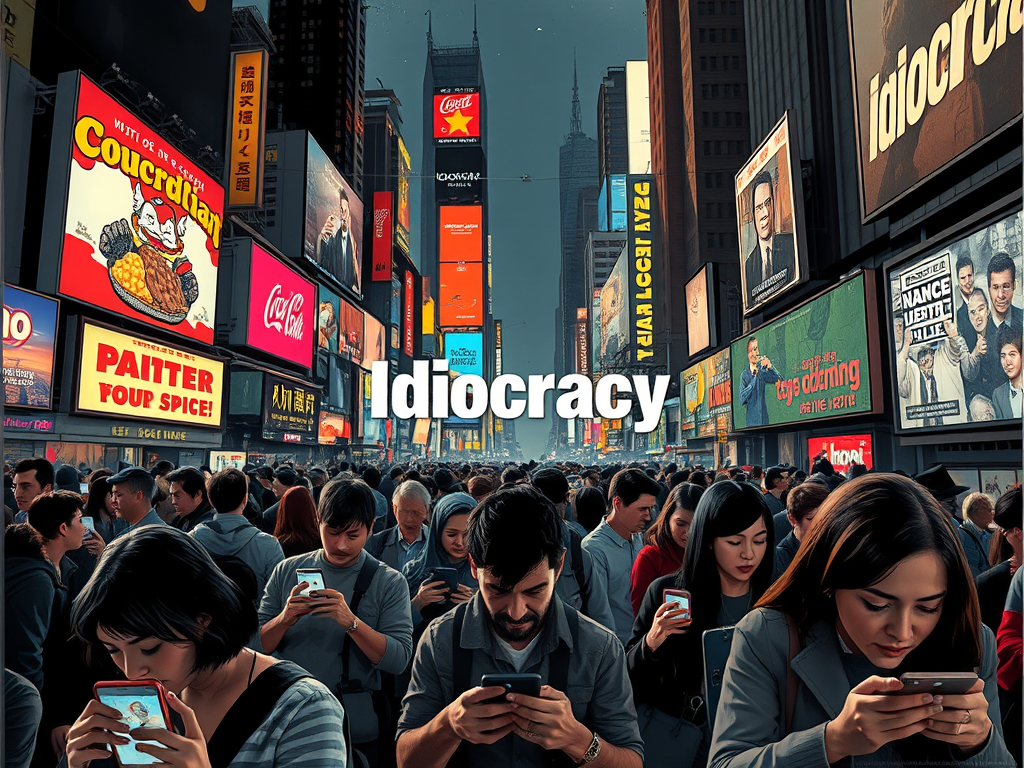
When Mike Judge released the movie Idiocracy, it looked like exaggerated dystopian comedy. A society governed by branding. Language reduced to slogans. Leadership selected by entertainment value. Today, it reads less like fiction and more like social commentary on digital culture.
We now live inside an attention economy driven by algorithms. And algorithms reward what is:
- Emotional
- Simplified
- Polarizing
- Shareable
Not what is accurate. Not what is complex. Not what is intellectually rigorous.
This is exactly the danger I described before 🔽
Influencer culture, viral content, click-driven media, performative politics — all of it elevates visibility over expertise. Scientists, researchers, engineers, physicians — the people who build, maintain, and repair reality — compete in a marketplace optimized for spectacle.
Meanwhile, cognitive trends are shifting. After decades of rising IQ scores (the Flynn effect), multiple Western datasets show stagnation or measurable decline in younger cohorts, including Gen Z. The reasons are debated: screen saturation, reduced deep reading, fragmented attention spans, educational transformation, environmental stressors.
Regardless of cause, the pattern aligns with something obvious: We consume more information than ever.
We think deeply less than ever!
Public discourse is compressed into short-form content. Complex policy becomes meme-level argument. Nuance is algorithmically disadvantaged.
That is not accidental. It is incentive architecture.
The danger is not that people are incapable.
The danger is that systems reward shallow processing and punish sustained reasoning.
And here is the grim reality:
AI, machine learning, science, administration — all depend on human cognitive quality. Artificial intelligence does not replace human intelligence; it amplifies it. If collective reasoning declines, AI will amplify confusion as efficiently as it amplifies insight.
Algorithms are not neutral. They are optimized for engagement. If engagement favors outrage over evidence, we get digital Idiocracy.
So what do we do — practically?
- Share long-form analysis, not just clips.
- Reward skill publicly.
- Support thinkers who favor evidence.
- Slow down before reacting.
If we want smarter systems, we need smarter cultural incentives.
Idiocracy did not predict the future.
It described the incentive structure we chose.
The warning signs are not subtle.
They are measurable — in discourse quality, in cognitive trends, in the collapse of expertise into entertainment.
This is no longer satire drifting toward reality.
This is reality.
The only remaining variable is not awareness.
It is whether enough people are willing to break the cycle — to reject algorithmic manipulation, to reward competence over charisma, and to rebuild standards before systemic decline hardens into permanence.
AI, science, governance — all of it depends on human intellectual integrity.
If we erode that, no technology will save us.
We are not watching Idiocracy unfold.
We are living inside it.
💡💡💡💡
Note by the author
In this section, I would like to take a moment to express my gratitude to all of the readers who have embarked on this journey with me. Your support and engagement have been invaluable, providing motivation and inspiration throughout the writing process. I hope that the insights and stories shared within these pages resonate with you, sparking curiosity and reflection. As we explore complex themes and ideas together, I encourage you to connect with the material, ask questions, and share your perspectives. Your unique viewpoints enrich the narrative and create a dynamic dialogue that enhances our collective experience.
I do not align with any extremes in current divided environment. I avoid outrage and focus on clear thinking, evidence, and balance. My voice is quieter, but it remains important. My approach is based on scientific training, extensive study, and practical experience, valuing quality over ideology and analysis over showmanship. In a culture that favors spectacle, holding this standard takes effort and support. If you appreciate balanced thinking and expert work, you can help make sure that competence stands out amidst the noise.
There are several ways to contribute:
1. Donate through the donation button 🔽
Make a one-time donation
Make a monthly donation
Make a yearly donation
Choose an amount
Or enter a custom amount
Your contribution is appreciated.
Your contribution is appreciated.
Your contribution is appreciated.
DonateDonate monthlyDonate yearly2. Donate via PayPal PayPal.Me
3. Become a paid subscriber to my Substack, where you will get exclusive insights and content
genuineprospect | Dr Lidiya Angelova | Substack
4. Another way to support this work and support yourself is by purchasing my book, Essential Handbook for Restoring Balance After Vaccination and Everyday Life Challenges.
Extreme health approaches can harm both the body and mind, just like ignorance in society. This book presents a practical and balanced choice based on years of scientific training and real experience as a biologist. It offers clear guidance and steps to improve resilience and well-being without fear or extreme ideas.
By choosing balance for your own health, you also support independent, expertise-driven work that challenges idiocracy.
Get the book here: https://payhip.com/b/vyCSn
As a token of appreciation, all of my supporters will receive this book as a gift, reinforcing my gratitude for your backing. If you have any interest in natural health advice, feel free to reach out to me via email at genuineprospect@proton.me or here, and I would be more than happy to assist you on your journey to better health and wellness.

 GenuineProspect
Leave a comment