Bioremediation has always fascinated me because it shows something beautiful: nature already has the tools to repair the damage we create. In my Oxford University Press article, I explained how microorganisms — tiny, ancient, incredibly adaptable life forms can clean up pollution that would otherwise poison ecosystems for decades. Today, I want to expand on that message and show how this same natural technology can help us deal with one of humanity’s biggest environmental challenges: nuclear waste.
🌍 What is bioremediation?
Bioremediation is the use of living organisms mostly bacteria, archaea, and fungi to break down, transform, or immobilize harmful substances in the environment.
These microorganisms have evolved for billions of years, learning to survive in extreme conditions: toxic metals, high radiation, acidic waters, and oxygen‑poor soils. Because of this, they can do things no chemical or mechanical method can achieve alone.
In simple terms:
Bioremediation lets nature clean up after us.
🛢️ Where is bioremediation used today?
Bioremediation is already widely used, often quietly, in places most people never hear about:
1. Oil spill cleanup
Microbes can break down hydrocarbons — the main components of oil into harmless substances like water and carbon dioxide. This is crucial because oil spills can damage ecosystems for decades if left untreated.
2. BTEX contamination (benzene, toluene, ethylbenzene, xylenes)
These toxic chemicals from the oil and gas industry often leak into groundwater.
Certain bacteria and archaea can break BTEX compounds into less harmful molecules, preventing long‑term health and environmental damage.
3. Coal and metal mine recovery
Mining leaves behind acidic, metal‑rich waste that destroys soil and water quality.
Microorganisms can neutralize acidity, bind heavy metals, and help restore ecosystems.
4. Industrial chemical cleanup
From pesticides to solvents, microbes can degrade many pollutants that would otherwise persist for generations.
It shows that bioremediation is not experimental — it is proven, scalable, and already protecting ecosystems worldwide.
☢️ Bioremediation and nuclear waste: a powerful but underused solution
When people hear “nuclear waste,” they imagine something untouchable.
But microorganisms have been living in radioactive environments long before humans existed. Some fungi even use radiation as an energy source.
Here is how microbes can help with nuclear waste:
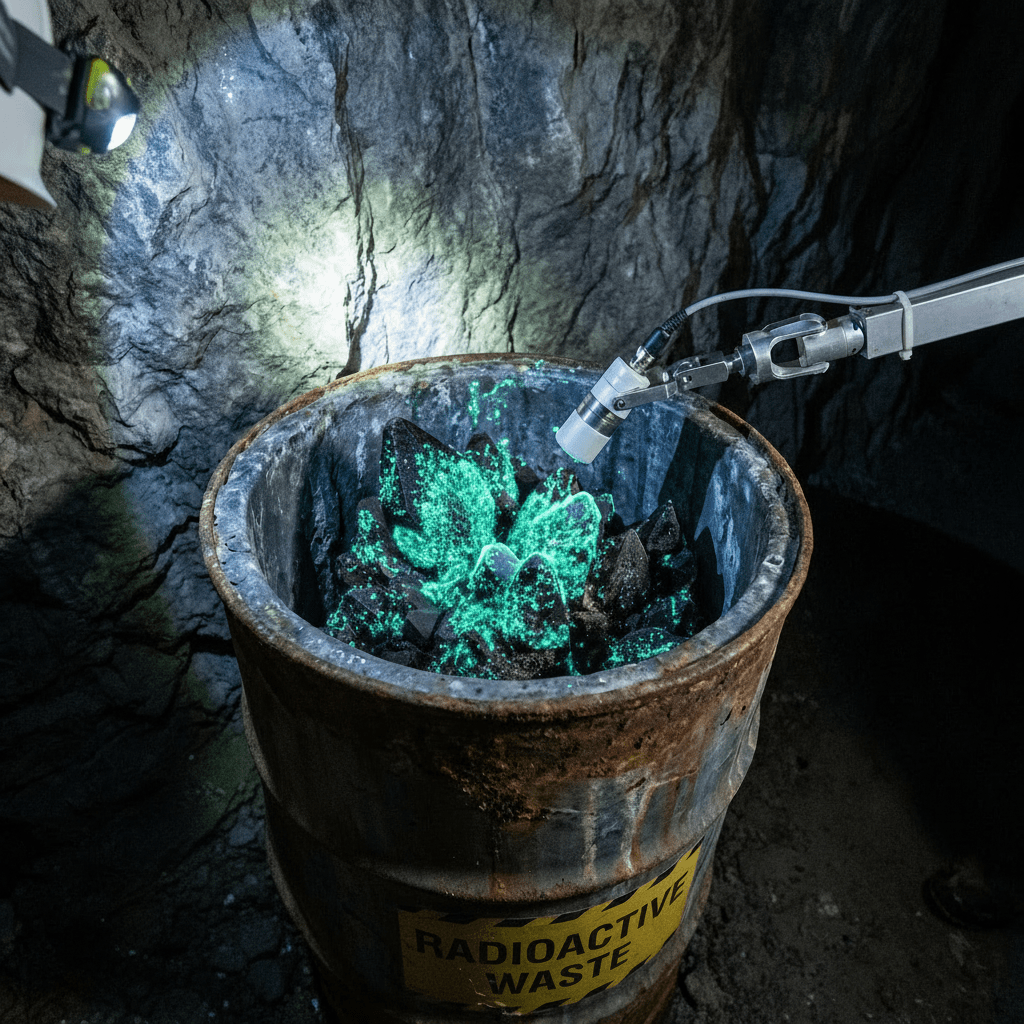
1. Immobilizing radioactive elements
Certain bacteria and fungi can convert soluble radionuclides into solid minerals.
This prevents radioactive materials from spreading into groundwater.
2. Changing chemical states of radionuclides
Microbes can transform uranium, technetium, and other elements into forms that are less mobile and easier to contain.
3. Working in extreme environments
Radiation-resistant species, like Deinococcus radiodurans, can survive in places where humans cannot. Understanding how it does this can help improve bioremediation techniques and safety equipment for workers.
4. Restoring contaminated soils
Microbial communities rebuild soil structure, allowing plants to return and stabilizing the environment.
5. Reducing long‑term risk and cost
Bioremediation can be applied in situ, meaning the contaminated area does not need to be dug up or transported — reducing cost, danger, and environmental disturbance.
I have worked on microbial remediation research myself, and many other scientists worldwide have demonstrated these mechanisms in laboratories and field trials.
The science is solid. What we need now is political will and public awareness.
⚡ Why nuclear power is one of the cleanest and most efficient energy sources
Nuclear energy often gets misunderstood, but the facts are simple:
- It produces extremely low CO₂ emissions.
- It generates large amounts of electricity from a very small amount of fuel.
- It runs continuously, day and night, regardless of weather.
- It uses far less land than most renewable sources.
- Its waste volume is tiny compared to fossil fuels and can be safely managed with modern technology.
If we want a stable future, nuclear power is one of the strongest tools we have, as it provides a significant amount of energy with low greenhouse gas emissions compared to fossil fuels.
And with bioremediation, we can make nuclear waste management even safer, cleaner, and more sustainable, employing innovative techniques that utilize natural processes to mitigate and eliminate the hazardous effects of radioactive materials, thereby ensuring a healthier environment for future generations.
A theoretical concept: using bioremediation tools during a nuclear accident
Below is a simple diagram showing a theoretical idea: using microorganisms or their natural products to help reduce the spread of radioactive dust during a nuclear accident. 🛑This is not a current technology — it is only a concept based on what we know microbes can do.
🟥 1. NUCLEAR ACCIDENT
- Something goes wrong in the plant
- Radioactive dust rises into the air
🟨 2. CHECK THE AIR
- Which way the wind blows
- How high the dust goes
- What particles are inside
🟥 3. BIO-TOOLS READY
- Sticky natural materials that grab radioactive dust
- Special bio-powders that catch tiny particles (iodine, cesium, etc.)
- Safe microbes or microbial products that lock harmful elements in place
🟨 4. SPRAY INTO THE AIR
- Aircraft or drones release bio-material
- Ground sprayers shoot it upward
- Works like weather‑modification spraying
🟥 5. DUST GETS HEAVIER
- Bio-material sticks to radioactive dust
- Dust clumps together
- Falls down sooner and closer
🟨 6. CONTROLLED LANDING AREA
- Pre-selected safe zone
- Closed to the public
- Easier to clean
🟥 7. CLEANUP ON THE GROUND
- Microbes lock radiation in soil
- Water and soil treated naturally
- Nature slowly recovers
🧭 A path forward
Bioremediation is not science fiction. It is a natural, elegant, and already proven technology.
By combining engineering (secure storage, containment) with biology (microbial stabilization and cleanup), we can create a safer and more responsible nuclear future.
But for this to happen, people need to know these solutions exist.
Governments need to hear from informed citizens.
And the public needs to understand that nature itself offers tools to protect our planet.
I hope this article helps spark that conversation.
❤️ A note from me
I share this work freely because people deserve access to clear, independent information about the environment, science, and the world we live in. I am not funded by any institution or organization, and I continue this work on my own time and resources.
What I write often challenges dominant narratives in two areas that shape our future: healthcare and the environment. I do it because people deserve the full story, not just the convenient one.
If my research, explanations, or writing help you understand these issues better, please consider supporting this work. Independent voices survive only when readers choose to keep them alive.
Here’s how you can help:
- Support my work directly via PayPal → PayPal.Me or donation
Make a one-time donation
Make a monthly donation
Make a yearly donation
Choose an amount
Or enter a custom amount
Your contribution is appreciated.
Your contribution is appreciated.
Your contribution is appreciated.
DonateDonate monthlyDonate yearly- Become Substack Paid Subscriber genuineprospect | Dr Lidiya Angelova | Substack
- If you want to support the fight and benefit from my expertise at the same time, reach out at genuineprospect@proton.me
- Encourage others to read and learn
- Stay engaged and informed
- Share my articles
💡 For anyone concerned about vaccines or possible exposure, my book is what they need.
I originally intended it for the vaccinated, but it evolved into valuable advise for everyone. Buying it not only helps you protect your health but also supports my ongoing work. It is available on eBook format here → Payhip.
Essential Handbook for Restoring Balance After Vaccination and Everyday Life Challenges provides practical, evidence-based techniques for nervous-system regulation, vaccines and stress recovery, and resilience in modern life – without extremes or costly supplements. It combines modern science with a holistic viewpoint.
Your support in any form truly makes a difference.
With heartfelt love and unwavering care, let’s craft a vibrant world that nurtures the mind and spirit, igniting deep connections and an unyielding sense of belonging. By embracing compassion and understanding, let’s passionately celebrate our rich diversity and the powerful strength found in unity. Together, let’s forge a thriving community that radiates warmth and fervently inspires everyone to share their unique gifts, enriching our lives in extraordinary ways.
Dr Lidiya Angelova
 GenuineProspect
Leave a comment